
Not at all. Surgery is one option, but it’s far from the only route—and for many people, it isn’t the first one to consider. In fact, a growing number of individuals are managing and improving diastasis recti Sonning without going anywhere near an operating room.
What works best really comes down to how wide the separation is, how you live day to day, and what you want to achieve in the end. Check Out Our non-surgical treatments to be more confident with ageing
If the gap is mild or moderate, you can often make a noticeable improvement by sticking with the right treatments and being consistent over time.
What Exactly Is Diastasis Recti and Why Does It Happen?
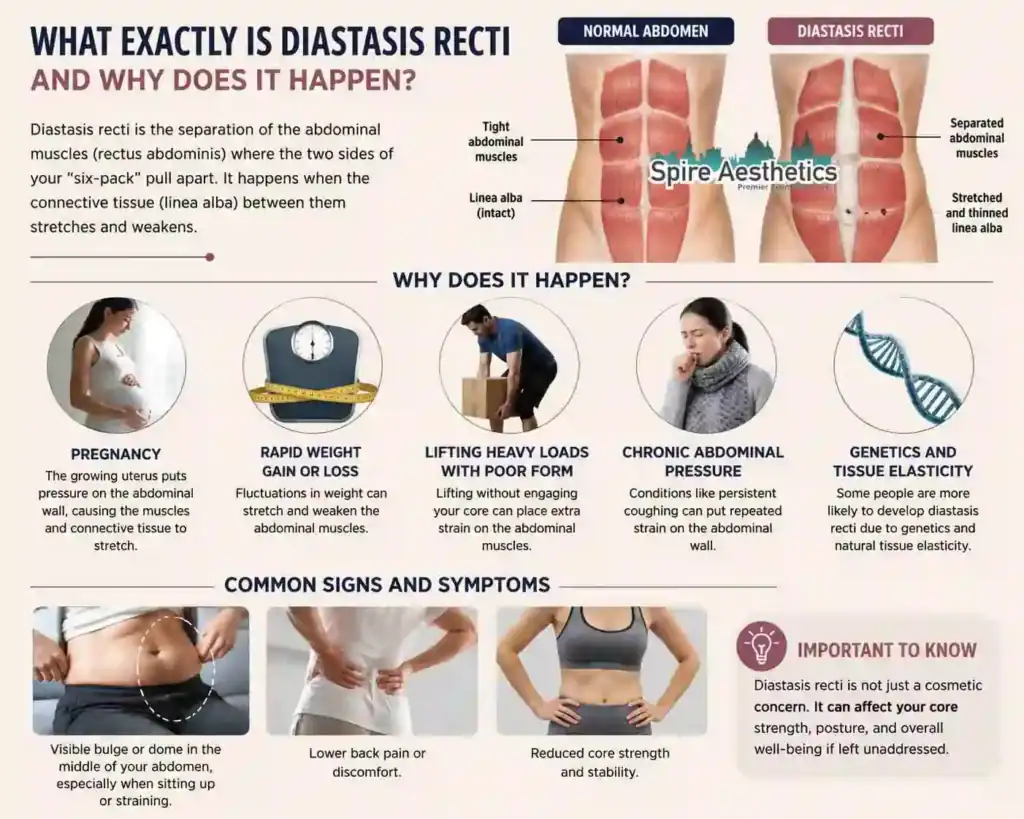
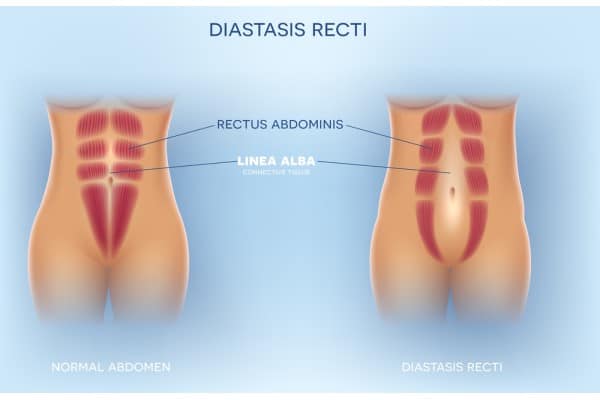
At its most basic, diastasis recti Sonning is the splitting of the abdominal muscles — or in laywoman’s terms, where the two sides of our six-pack (our rectus abdominis) separate. When it stretches and weakens the connective tissue between them, this happens.
Usually, this is related to pregnancy since the enlarged womb compresses the stomach muscle wall. But, postnatal women are not the only group affected by this. Males can get it as well, specifically due to:
- Rapid weight gain or loss
- Lifting substantial loads with little to no core engagement
- Repeated strain on the abdomen (such as repetitive coughing)
- Genetics and natural tissue elasticity
You will see a lump in the centre of your abdomen, especially when you are sitting up or straining. Others have lower back pain and reduced core stability.
Do You Always Need Surgery to Repair Diastasis Recti Sonning?
No, you don’t always need surgery. In fact, many cases don’t require it at all.
Surgery is usually reserved for more severe separations or when there’s an associated hernia. It’s also sometimes chosen for cosmetic reasons when other methods haven’t delivered the desired outcome. Also check Our Our Non-surgical double chin removal.
That said, surgery comes with recovery time, cost, and potential risks. Because of this, most people prefer to explore non-surgical options first—and quite often, they’re enough.
What Non-Surgical Options Are Available for Diastasis Recti?
There are still several nonsurgical methods of treatment that aim to address the core of a problem by strengthening and rehabbing muscle function rather than stitching muscles back together, etc.
Here are a few of the most common suggestions:
- Targeted core exercises: Gentle, controlled exercises that target the core and work to engage deeper abdominal muscles (not classic crunches or sit-ups).
- Physiotherapy: This therapy provides an individual rehabilitation plan under professional supervision.
- Postural correction: General stance can alleviate pressure on the anterior abdomen
- Support Wear: Short-term assistance whilst your core rebuilds strength
The key here is consistency. According to recent medical research, structured exercise programs can help reduce abdominal muscle separation in women with diastasis recti, but improvements in core function may not be immediately noticeable and may not be significantly better than other approaches in terms of disability scores.
Can Body Contouring Treatments Help Improve Diastasis Recti?
Body contouring treatments don’t directly “fix” the diastasis recti, but they can certainly enhance how the abdominal region appears and works.
Some treatments are designed to:
- Stimulate muscle contractions
- Improve tone and firmness.
- Promote the loss of stubborn fat.
It can help your stomach look firmer and more toned, even while the underlying separation is still being improved with other treatments. See Here: Regaining Confidence After Pregnancy: How to Tackle Postpartum Fat Gain
Instead, you should consider these treatments as part of a bigger plan that encompasses all facets of life rather than simply thinking about an easy out.
Is EMS or Muscle Stimulation a Better Alternative to Surgery?
EMS (electromagnetic muscle stimulation) is a viable alternative for many. Check Out For Healthy Weight Loss Diets Sonning
They produce extreme muscle contractions, far deeper than you can achieve with voluntary exercise. Over time, this can help:
- Strengthen weakened abdominal muscles.
- Improve core stability
- Natural closure of the gap with support
While not a substitute for surgery in severe cases, it is extremely effective in mild to moderate diastasis recti Sonning.
It is also non-invasive, has no downtime needs and easily fits into a busy schedule.
How Long Does It Take to See Results Without Surgery in Diastasis Recti?
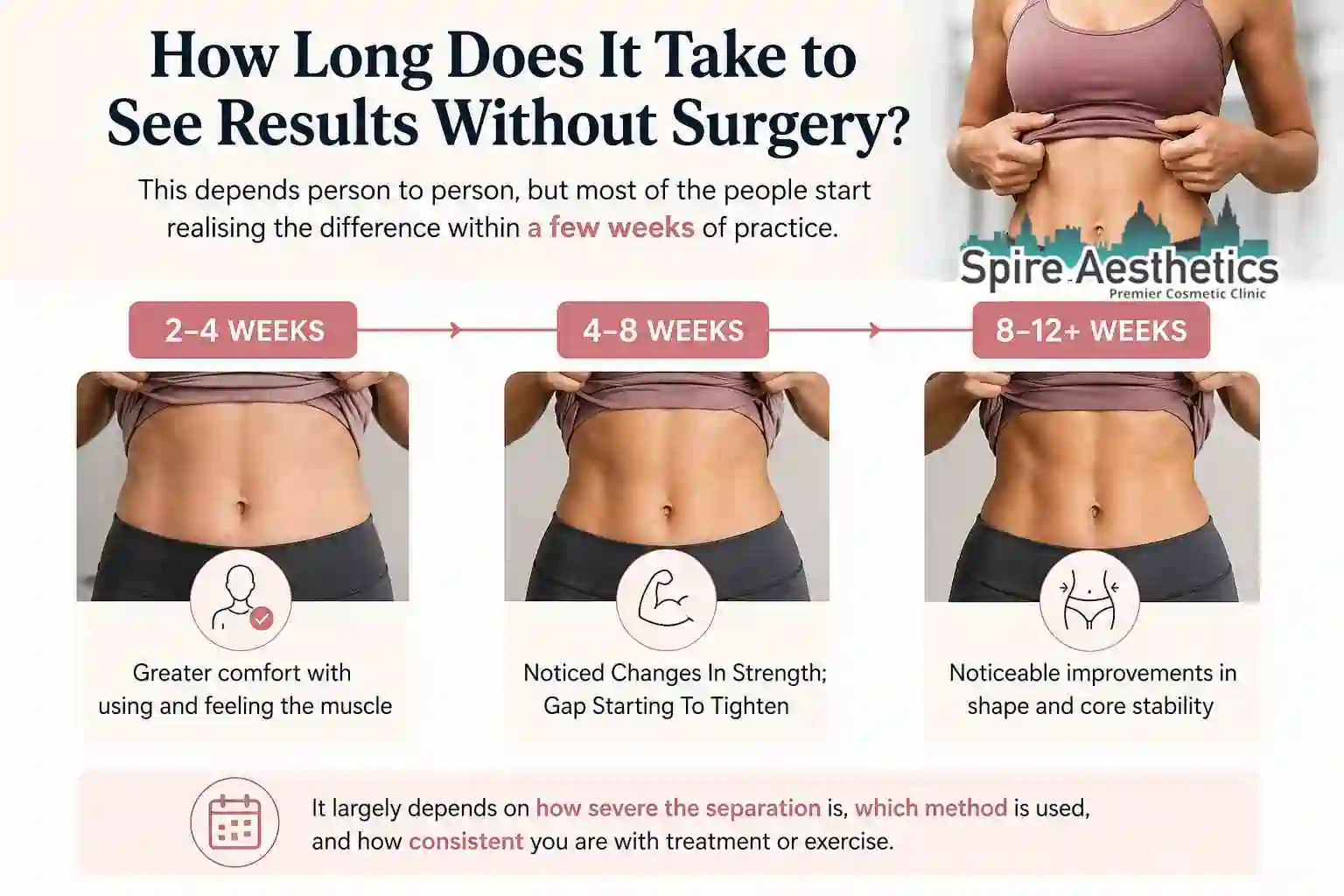
This depends person to person, but most of the people start realising the difference within a few weeks of practice.
Typically:
- 2–4 weeks: Greater comfort with using and feeling the muscle
- 4–8 Weeks: Noticed Changes In Strength; Gap Starting To Tighten
- 8–12+ weeks: Noticeable improvements in shape and core stability
It largely depends on how she is separated, which method is used, and how consistent you are with treatment or exercise.
Why Are More People Choosing Non-Surgical Treatments Today?
There’s been a clear shift towards non-invasive solutions—and it’s easy to see why. See Our Diastasis Recti Treatment Sonning Price Here!
People are looking for treatments that:
- Fit around their daily lives.
- Don’t involve recovery time.
- Carry fewer risks
- Still deliver visible, meaningful results.
With advancements in technology and a better understanding of core rehabilitation, non-surgical options are no longer seen as “second best”—they’re often the preferred starting point.

FAQs
Q: I’ve been told surgery is the only way to fix my stomach gap—do I really have no other option?
Not really. Surgery is usually only suggested when the separation is quite severe. In many cases, people see real improvement with simpler, non-surgical approaches like targeted core exercises or treatments such as EMS Body Sculpt.
Q: I’m scared of surgery and the recovery time—can non-surgical treatments actually give noticeable results?
Yes, especially for mild to moderate cases. They strengthen your core and improve appearance over time—without downtime.
Q: How can I tell if my diastasis recti Sonning is serious enough to need surgery rather than non-surgical treatment?
If the separation is quite wide, hasn’t improved over time, or is linked to a hernia, surgery might be recommended. In most other cases, people are usually advised to try non-surgical options first to see how much improvement they can achieve.
Q: Can non-surgical treatments fully close the gap, or is surgery the only way to fix it completely?
Surgery is the only way to physically reattach the muscles. That said, non-surgical treatments can still make a real difference. By strengthening your core, you help your stomach feel firmer, look flatter, and function better day to day—even if the gap isn’t fully closed.
Q: Is it better to try non-surgical treatments first, or am I just delaying the need for surgery Sonning?
Ideally, non-surgical options are tried first. It is more secure, easier, and mostly does the work. Surgery could be reconsidered down the line if necessary.
Q: What are the main differences in recovery between surgery and non-surgical treatments Sonning?
Surgery requires weeks of recovery. Most non-invasive procedures require no downtime, allowing you to resume your activities.
For Further Information, Please Call Us 03300100092